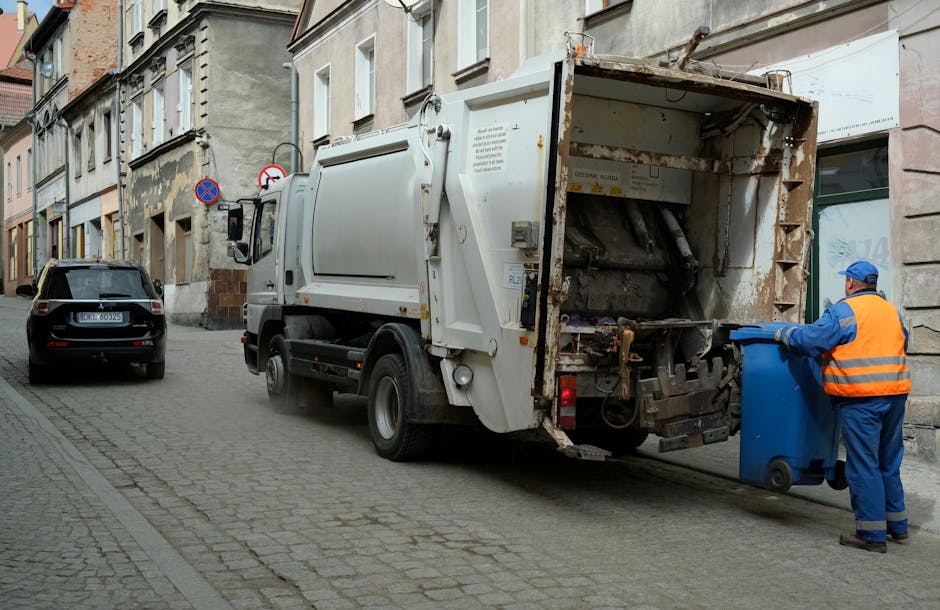
Avoid hidden rubbish removal fees in Greenwich: what to know before you book
If you have ever asked for a rubbish removal quote and then felt your stomach drop when the final invoice arrived, you are not alone. Hidden charges are one of the most frustrating parts of clearing out a flat, a garden, a loft, or a building project. The good news? Once you know what to look for, it becomes much easier to avoid hidden rubbish removal fees in Greenwich what to know before you agree to anything.
This guide breaks down how rubbish removal pricing usually works, where surprise costs tend to creep in, and how to compare quotes without getting caught out. It is written for real life, not for tidy brochure promises. Because let's face it, waste does not always sit neatly by the kerb, and a proper quote should reflect that from the start.
Whether you are clearing a few bulky items, dealing with builders' rubble, or sorting a full property, the aim is the same: a fair price, no awkward surprises, and a service that actually does what it says on the tin.
Table of Contents
- Why hidden rubbish removal fees matter
- How rubbish removal pricing works
- Key benefits of upfront pricing
- Who this is for and when it makes sense
- Step-by-step guidance to avoid surprise fees
- Expert tips for better results
- Common mistakes to avoid
- Tools, resources and recommendations
- Law, compliance, standards and best practice
- Options and comparison table
- Case study or real-world example
- Practical checklist
- Conclusion
- Frequently asked questions
Why hidden rubbish removal fees in Greenwich what to know matters
Hidden fees are not just annoying. They can completely change whether a clearance job feels manageable or stressful. A quote that looks reasonable at first can quickly become expensive if the company adds charges for labour, access, parking, stair carries, waiting time, disposal type, or minimum load fees after the job has already started.
In Greenwich, that matters even more because properties vary so much. You might be dealing with a narrow terrace street, a basement flat, a top-floor walk-up, a tight estate parking area, or a busy commercial site with loading restrictions. Those details can be legitimate pricing factors, but they should be explained clearly in advance. Not buried in tiny print. Not sprung on you halfway through the job.
The better the quote, the more specific it should be. A genuine rubbish removal provider should want to understand what is being removed, how much there is, where it is located, and whether anything needs special handling. That is how you avoid the classic "oh, we did not realise" conversation at the end.
Expert summary: The safest rubbish removal quote is not always the cheapest one. It is the one that clearly explains what is included, what might cost extra, and under what conditions those extras apply.
That is also why transparent services such as pricing and quotes pages are worth reading carefully before you book. Even if you do not choose a provider straight away, they help you compare like with like instead of comparing half-finished numbers.
How hidden rubbish removal fees in Greenwich what to know works
Rubbish removal pricing usually starts with one of three models: a fixed quote, a load-based price, or a price based on estimated time and labour. Each model can work well if it is explained properly. Trouble begins when the quote is only part of the story.
What a proper quote should include
A decent quote should make clear:
- what type of waste is being collected
- how much waste is included in the price
- how many staff and vehicles are needed
- whether loading is from inside the property or outside
- if stairs, lifts, or long carries affect the cost
- any disposal charges for specific waste types
- parking or access limitations that may matter
- VAT, if applicable
If a provider only gives you a vague "from" price and does not explain the basis for it, that is a yellow flag. Not always a deal-breaker, but definitely a sign to ask more questions. In our experience, the more honest companies do not mind being specific. They know clarity saves everyone time.
Where surprise costs often come from
Hidden rubbish removal fees tend to appear in the same places again and again:
- Access issues: narrow hallways, flights of stairs, no lift, long distance to the truck
- Extra volume: more rubbish than described during the quote stage
- Special waste: items that need separate handling or disposal rules
- Heavy items: awkward furniture, mattresses, soil, rubble, white goods
- Timing: same-day bookings, waiting time, or out-of-hours jobs
- Parking or permits: if access is tight and the vehicle cannot stop nearby
Some of those costs are fair if they are genuinely needed. What matters is whether you were told about them before the team turned up. That is the whole game, really.
Why photo quotes can help, but only if used well
Sending photos or a video walkthrough often helps reduce surprises. A picture of a garage piled high with old boxes, broken shelving, and a bike frame tells a much better story than "just a small clearance." But photos are only as good as the description that goes with them. Mention what is hidden behind the first layer, whether items are heavy, and whether there are access issues. A quick five-minute call can save a very expensive misunderstanding.
For property clearances, you may also want to compare related services such as house clearance, home clearance, flat clearance, or loft clearance. Different job types can involve different access, labour, and disposal needs, which affects pricing.
Key benefits and practical advantages
The obvious benefit of avoiding hidden fees is saving money. But honestly, the bigger gain is peace of mind. You know where you stand. You can budget properly. You can decide whether to go ahead, delay the job, or change what is being removed.
What transparent pricing gives you
- Better comparison: you can compare quotes fairly instead of guessing what is included
- Less stress: no awkward debates at the end of the clearance
- Better planning: easier to time around moving day, renovations, or landlord deadlines
- Fewer disputes: clear expectations reduce arguments
- More control: you can decide what to keep, sell, recycle, or dispose of separately
There is also a practical advantage for larger jobs. If you are clearing out a garage, office, or builder's pile, even a small hidden charge repeated across several loads can become a real headache. One extra fee here, another there, and suddenly the quote is nowhere near the original number.
If your job involves mixed waste, it can help to understand the provider's wider service range, such as waste removal, builders waste clearance, or office clearance. The more closely the service matches the job, the less likely you are to be hit with unexpected extras.
Who this is for and when it makes sense
This guidance is useful for almost anyone arranging waste collection in Greenwich, but it is especially important in a few common situations.
Homeowners and tenants
If you are moving house, decluttering, or clearing a storage area, you may not know how much waste there really is until it is all piled up. That is where hidden fees can sneak in. A tenant leaving a flat in a hurry, for example, may accept the first quote that looks affordable and only notice the extras later. Not ideal.
Landlords and letting agents
When a tenancy ends, speed matters. You want the place cleared properly and fast, but you also need the invoice to make sense. Transparent pricing is especially useful if the job includes mattresses, bulky furniture, or a mix of general household waste and leftover belongings.
Businesses and offices
Commercial clearances can be more complex than they look. Desks, chairs, filing cabinets, IT equipment, and storage units often involve access planning and responsible disposal. If you are arranging a larger job, business waste removal is worth reviewing because the pricing logic may differ from domestic collections.
Builders, renovators and trades
Construction waste is heavy, awkward, and usually underestimated. A pile that looks manageable in the morning can become a lot more when it includes broken plasterboard, timber offcuts, tiles, and rubble. Hidden charges often appear where the waste was not described clearly enough from the outset.
Anyone dealing with bulky items
Old sofas, wardrobes, beds, garden waste, and garage clutter all create the same issue: they take more room and labour than people expect. If the job involves items that need special handling, services like furniture clearance, furniture disposal, garden clearance, or garage clearance may be more suitable than a generic "man and van" style arrangement.
Step-by-step guidance
If you want to avoid hidden rubbish removal fees in Greenwich what to know, the safest approach is simple and methodical. A little bit of preparation goes a long way here.
- List exactly what needs removing. Include bulky items, bags, loose waste, and anything awkward or heavy. If possible, separate what stays from what goes.
- Take clear photos. Wide shots are useful, but so are close-ups of access points, staircases, and anything unusual. A photo of the item is good; a photo of the route out is even better.
- Describe access honestly. Mention lifts, stairs, parking restrictions, narrow entrances, basement rooms, or long walks from the property to the loading point.
- Ask what the quote includes. Do not be shy. Ask if labour, disposal, VAT, and loading time are all included. If not, ask what is excluded.
- Ask when extra charges apply. If the provider says there may be additions, get the conditions in plain English. What changes the price? By how much? Under what circumstances?
- Check the waste type. General waste, garden waste, rubble, furniture, and specialist items may be charged differently. If you are unsure, ask before booking.
- Confirm the final price in writing. Email or message confirmation is useful. Even a short written summary is better than memory alone.
- Read the terms carefully. This is where some of the less friendly surprises live. It is not glamorous reading, admittedly, but it matters.
That final point is worth pausing on. Terms and conditions are not exciting, but they often explain the exact boundaries of the service. If you are comparing providers, review the terms and conditions before the booking is locked in.
Also, if you are paying online or by card, a provider's payment and security information can help you understand how transactions are handled. Nothing dramatic there, just sensible due diligence.
Expert tips for better results
Here are the practical habits that make the biggest difference. These are the small things that separate a smooth collection from a stressful one.
1. Ask for a total, not a headline
A headline price can look lovely. Then the extras appear. Always ask for the likely total cost based on the information you have given. If the provider cannot estimate the total at all, that is a sign to dig deeper.
2. Be realistic about volume
People often underestimate how much space clutter takes up. A few bags, some broken furniture, and a pile of cardboard can fill a vehicle faster than expected. Better to overestimate slightly than to be told the job costs more because the load was larger than described.
3. Mention anything awkward
We are talking pianos? Not common, but you get the idea. Heavy wardrobes, appliances, safes, rubble bags, and garden soil all need honest mention. If it is awkward to carry, say so. A good company will prefer the truth.
4. Ask about recycling and reuse
This matters more than many people realise. A provider with a thoughtful approach to reuse and sorting may be better organised overall. You can learn a lot by reading about their recycling and sustainability approach. It is not just about being green for the sake of it; it often indicates a more disciplined operating process.
5. Use one point of contact
If several people are describing the same job, details get lost. One clear summary from one person keeps the quote cleaner. A small thing, but it helps.
To be fair, if a provider keeps answering your straightforward questions with vague wording, that tells you something. Maybe not everything, but enough.
Common mistakes to avoid
Most fee surprises come from a handful of very avoidable mistakes.
- Booking on price alone: the cheapest quote is not always the best value
- Describing the job too vaguely: "a bit of rubbish" is not enough detail
- Forgetting access details: stairs, parking, and loading distance affect the job
- Assuming all waste is treated the same: different materials can carry different handling costs
- Not checking what happens if the load changes: extra items can change the price
- Ignoring the small print: this is where many extra charges are explained
- Leaving the sorting until collection day: that usually slows everything down
One real-world pattern shows up a lot: someone wants a loft cleared, but only after the team arrives do they remember there are old suitcases, boxes of books, a broken wardrobe, and some heavy paint tins in the corner. The quote was not necessarily dishonest; it was incomplete. The difference matters.
If your clearance involves a property with several rooms or mixed contents, services like home clearance or house clearance are usually a better starting point than a rough "one load" estimate.
Tools, resources and recommendations
You do not need fancy software to avoid hidden rubbish removal fees. A phone, a notepad, and a camera are usually enough. Still, a few simple tools make the process cleaner.
Useful things to have ready
- clear photos of the waste
- a short written list of what is being removed
- access notes for the property
- approximate timing for collection
- questions about pricing, labour, and disposal
Helpful pages to review before booking
If you are comparing a local provider, these pages can help you understand the business better before you commit:
- about the company and how they work
- how quotes are structured
- insurance and safety details
- health and safety policy
- complaints procedure
That last one is especially useful. Nobody wants to use it, obviously, but if a dispute ever arises, it is reassuring to know there is a clear route for raising a concern.
And if you want to start from the main site before exploring services, you can always visit the homepage. Simple, direct, no fuss.
Law, compliance, standards and best practice
Waste removal is not just a pricing issue; it is also a responsible handling issue. In the UK, waste must be managed properly, and reputable operators generally follow accepted industry practice for collection, transport, sorting, and disposal. You do not need to become a compliance expert to book a clearance, but it helps to know the basics.
A few sensible expectations apply almost everywhere:
- waste should be transported safely and responsibly
- items should be sorted where possible for recycling or reuse
- hazardous or specialist materials should be handled with care
- the provider should be clear about what they can and cannot take
- insurance and safety arrangements should be in place for the work
If a company cannot explain how it handles safety, access, or disposal, that is a problem. Not necessarily a dramatic one, but enough to move on.
It is also worth being careful with items that may require special treatment, such as electrical goods, paint, chemicals, or construction debris. The right provider will tell you when something falls outside ordinary collection. That honesty is a good sign, not a nuisance.
For larger or more specialised jobs, you may want to compare service pages such as builders waste clearance or office clearance so the job is matched to the right type of collection. In practice, that often makes the pricing clearer too.
Options, methods, or comparison table
Different ways of arranging rubbish removal suit different jobs. Here is a simple comparison to help you decide what fits best.
| Method | Best for | Pros | Watch out for |
|---|---|---|---|
| Fixed quote | Clear, well-described jobs | Easy to budget; fewer surprises | Needs accurate information upfront |
| Load-based pricing | Mixed or variable waste amounts | Flexible; often practical for bulky items | Volume estimates can be tricky |
| Labour-based pricing | Complex access or heavy lifting | Useful where effort is the main issue | Time and access must be understood clearly |
| Full property clearance | Houses, flats, lofts, garages, offices | Convenient for larger jobs | Needs a detailed briefing to avoid extras |
If you are unsure which approach suits you, a short conversation with the provider usually clears it up quickly. The goal is not to find the fanciest method. It is to find the most honest one for the job at hand.
Case study or real-world example
Here is a realistic Greenwich scenario. A couple in a top-floor flat needed to clear out an old sofa, a broken desk, several bags of mixed household waste, and a few small appliances before a move. The first quote they received was attractive, but it did not ask about stairs, parking, or the exact number of items. They almost booked it.
Instead, they sent photos, explained that the lift was unreliable, and mentioned the flat was down a narrow staircase. The revised quote was slightly higher, but it was accurate. On the day, the team arrived knowing what to expect. No grumbling, no awkward "that will be extra," and no surprise invoice after the van door shut.
That is the difference, really. A good quote may not always be the lowest one, but it often turns out to be the cheapest in practice because it avoids friction, delays, and add-on charges.
Another simple example: a homeowner clearing a garden shed assumed all the waste would count as "green waste." In fact, there was timber, metal shelving, plastic storage, and some old tools mixed in. Once that was described properly, the pricing made sense. Before that, it looked like a bargain. After that, it was just a bargain-shaped headache.
Practical checklist
Use this before you accept any rubbish removal quote in Greenwich:
- Have you listed every item or type of waste?
- Have you sent clear photos or a video if needed?
- Have you explained access, stairs, and parking constraints?
- Do you know whether labour is included?
- Do you know whether disposal fees are included?
- Have you asked about VAT or other additions?
- Have you checked what happens if the load is larger than expected?
- Have you read the terms and conditions?
- Do you know how the company handles safety and insurance?
- Do you feel comfortable that the price is clear and fair?
If you can tick those off, you are already ahead of most people. And yes, that sounds a bit dull, but dull is good when the invoice arrives exactly as expected.
Conclusion
Hidden rubbish removal fees are usually avoidable if you slow down, ask the right questions, and insist on clarity before the job starts. In Greenwich, where access can vary a lot from one property to the next, that clarity matters even more. A good provider should make pricing feel straightforward, not mysterious.
The short version: be honest about the job, confirm what is included, read the terms, and never be afraid to ask for a written total. That simple discipline can save money, time, and a lot of irritation.
And if you want a smoother experience from the start, choose a service that explains its process properly and respects your time. That alone removes half the stress.
Get a free quote today and see how much you can save.
When the dust settles and the space is finally clear, that feeling of relief is worth a lot. Quiet room, empty floor, no hidden surprises. Properly satisfying, really.
Frequently Asked Questions
What are hidden rubbish removal fees?
They are extra charges that are not clearly explained before booking, such as fees for access, labour, disposal type, parking, or waste volume changes.
How can I tell if a quote is misleading?
If the quote is vague, only gives a "from" price, or avoids answering questions about labour and disposal, it may not be fully reliable. Ask for a written breakdown.
Do rubbish removal companies charge extra for stairs?
Some do, especially if the job involves carrying items up or down several flights. That is not unusual, but it should be disclosed in advance.
Is a cheap rubbish removal quote always a bad sign?
Not always. But if it is much lower than others, check what is included. Sometimes the low price only covers a very small amount of waste or easy access.
Should I send photos before booking?
Yes, if possible. Photos help the provider assess volume, access, and the type of waste more accurately, which reduces the risk of surprise charges.
What information do I need to give for an accurate quote?
Tell them what needs removing, how much there is, where it is located, whether there are stairs or lifts, and whether anything is heavy or awkward to move.
Can furniture or appliances cost more to remove?
They can, depending on size, weight, and disposal requirements. Bulky items often need more labour and space than people expect.
Why do some rubbish removal jobs cost more in flats?
Flat clearances can involve stairs, lifts, limited parking, and longer carrying distances. Those factors can increase labour and time.
What should be in the terms and conditions?
They should explain what the quote covers, when extra charges may apply, cancellation rules, access requirements, and how the provider handles disputes.
Is it better to choose a fixed quote or a load-based price?
It depends on the job. Fixed quotes work well when the waste is clearly described, while load-based pricing can suit mixed or changing amounts of waste.
How can I avoid disputes on the day?
Confirm everything in writing before the collection, share accurate details, and make sure any possible extras are explained and agreed in advance.
Do I need to worry about safety and insurance?
Yes. A reputable provider should have sensible safety procedures and appropriate insurance arrangements. It is one of the clearest signs you are dealing with a professional service.
What if I am not sure how much waste I have?
That is common. Take photos, estimate honestly, and ask the provider how they prefer to assess uncertain jobs. A quick call or message often helps.
Where should I start if I want to compare services?
Start with the provider's pricing, terms, and service pages so you can understand what is included and how they work before you commit.