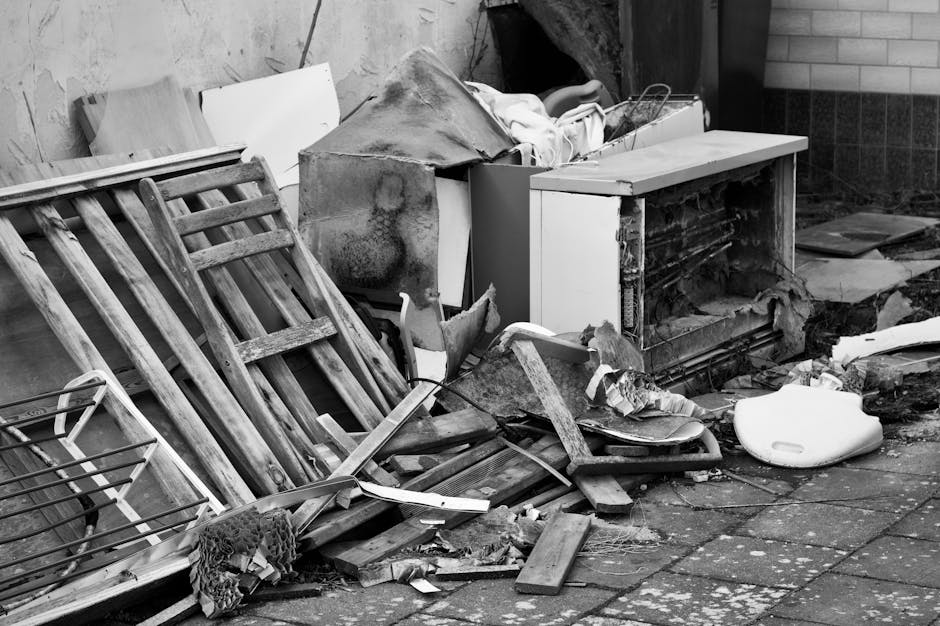
Bulky waste removal SE10 tips for Creek Road residents
If you live near Creek Road and you have a sofa blocking the hallway, an old mattress leaning against the wall, or a stack of broken bits from a recent clear-out, bulky waste can feel oddly heavy before you even move it. The good news is that bulky waste removal SE10 tips for Creek Road residents do not need to be complicated. With a little planning, you can avoid awkward lifting, wasted trips, and that classic "where on earth does this go?" feeling.
This guide walks through the practical side of bulky item disposal in SE10: what counts as bulky waste, how the process usually works, how to prepare items properly, what mistakes to avoid, and when a professional clearance service is the easier option. You will also find a checklist, a comparison table, and real-world advice for people dealing with furniture, garage clutter, loft leftovers, or general household waste. Let's make it simpler. Not perfect. Just simpler.
Why bulky waste removal SE10 tips for Creek Road residents Matters
Creek Road sits in a part of Greenwich where homes, flats, and mixed-use spaces can have limited storage, tight stairwells, and not much spare room for "I'll deal with that later" items. That is exactly why bulky waste removal matters. One large item can disrupt a room. Three or four can turn a tidy flat into a stressful mess very quickly.
Bulky waste also brings practical risks. A worn-out wardrobe can scratch walls on the way out. A rusty metal bed frame can cut hands if it is dragged carelessly. A waterlogged garden chair can drip dirt through communal hallways. And if you are near shared entrances or parking, there is the added headache of timing, access, and courtesy to neighbours. Honestly, the lifting is often the easy part.
There is also the question of disposal quality. Many bulky items are not just "rubbish"; they may still contain reusable materials, recyclable metal, untreated timber, textiles, or electrical components. Handling them properly helps reduce waste and keeps your clear-out a bit more responsible. If sustainability matters to you, that part is worth caring about.
For residents in SE10, the smartest approach is usually a mix of planning, sorting, and choosing the right removal route. A small sofa might be manageable with a van. A flat clearance after a move may need a broader service like flat clearance or home clearance. A garage full of old tools and broken storage units may be better handled through garage clearance. Different problem, different solution.
How bulky waste removal SE10 tips for Creek Road residents Works
In plain English, bulky waste removal is the collection and disposal of large items that are too awkward for normal household bins. That usually includes furniture, mattresses, wardrobes, white goods, exercise equipment, old shelving, broken garden furniture, and other large household objects. Some items need special handling because of weight, materials, or safety concerns.
For residents, the process usually follows a fairly simple rhythm:
- Identify the items you want removed and group them by type.
- Check access from your property to the kerb, lift, or loading point.
- Separate reusable, recyclable, and general waste where possible.
- Choose the collection method that fits the amount and type of waste.
- Prepare the items so the removal is quicker and safer.
- Confirm timing and payment details before the team arrives.
That sounds straightforward, and usually it is. The detail lives in the prep. A sofa with loose cushions, a wardrobe still full of clothes, or a chest of drawers with heavy contents all slow the job down and make accidents more likely. A bit of sorting upfront saves a lot of faff later.
If you are dealing with mixed household clutter, a broader waste removal service can be useful. If the items are mostly furniture, furniture clearance or furniture disposal may be more appropriate. For property-wide clear-outs, house clearance is often the better fit.
Key Benefits and Practical Advantages
The biggest benefit is obvious: you get your space back. But there is a bit more to it than that.
- Less physical strain: large items are easier to manage when lifted, carried, and loaded by people who do this regularly.
- Faster turnaround: a planned removal is usually much quicker than trying to dismantle and move everything yourself over a weekend.
- Reduced damage risk: experienced handlers know how to manoeuvre bulky items through hallways, staircases, and tight corners.
- Better sorting: items can be separated for reuse or recycling where suitable.
- Less disruption: a tidy, coordinated collection is easier on neighbours and shared entrances.
- Peace of mind: you know the job is being handled by a proper service rather than a guess-and-hope approach.
That last point matters more than people admit. A lot of waste-related stress comes from uncertainty: Is this allowed? Will it fit? Can I leave it by the entrance? What if it rains? What if the lift is too small? A good plan answers those questions before the first item is moved.
Expert summary: The best bulky waste removal jobs are not the ones where everything is dumped in a pile. They are the ones where the resident has sorted, measured, and prepped items so the removal can be safe, efficient, and clean.
If you are comparing services, it can help to look beyond price alone. Trust signals matter too: clear terms, sensible payment processes, safety information, and an obvious approach to responsible disposal. Pages like pricing and quotes, payment and security, and recycling and sustainability can give you a better sense of how a provider works.
Who This Is For and When It Makes Sense
This is for anyone in Creek Road, SE10, who has one or more large items to move and does not want the hassle of doing it alone. Simple as that.
It especially makes sense if you are:
- moving out of a flat and have furniture left behind
- replacing a bed, sofa, mattress, or wardrobe
- clearing a loft or spare room that has become an unofficial storage unit
- sorting a garage after years of "I might need that one day" decisions
- renovating or redecorating and need old materials removed
- running a small office or business and need bulky items cleared away
For businesses, the same logic applies, just with a slightly different rhythm. Old desks, filing cabinets, chairs, and obsolete stock need more structured handling. In those cases, office clearance or business waste removal may be the right route.
There are also moments when bulky waste removal is the sensible choice even if you think you could manage it yourself. For example: if you live up several flights of stairs, if the item is too awkward to dismantle safely, if you do not have access to a suitable vehicle, or if you simply do not want to spend Saturday afternoon wrestling a wardrobe through a narrow landing. Fair enough, really.
Step-by-Step Guidance
If you want this to go smoothly, follow a simple sequence rather than improvising on the day.
1. Make a full list of what needs to go
Walk through the property and write down every bulky item. Include the obvious things first, then check behind doors, under beds, inside sheds, and in the loft. People often forget a mattress base, broken lamp, or old exercise bike until the last minute. That last-minute discovery is never fun.
2. Decide what is being removed and what is staying
Be firm here. If the item is damaged but still useful, decide whether it will be donated, reused, or removed. If it is staying because someone might repair it later, make sure that decision is real. Not "real-ish". Real.
3. Measure the largest items and the access route
Check doorways, stair width, lift size, and any tight corners. A wardrobe that looks straightforward in a bedroom can become a different animal by the front door. If access is awkward, dismantling may be needed before collection.
4. Separate hazardous or special items
Some bulky items need extra care. Fridges, freezers, electronic items, paints, chemicals, and anything with sharp edges should be identified early. If you are unsure whether something needs special handling, treat it cautiously rather than guessing.
5. Remove contents and loose parts
Empty cupboards, drawers, shelves, and compartments. Take off detachable legs, cushions, shelves, and cables where that makes sense. This reduces weight and speeds up the lift-out.
6. Protect your space
Lay down protection where items may pass through hallways or communal areas. Even a simple moving route can scuff walls, especially in older buildings where corners are already a bit worn.
7. Confirm collection details in advance
Check the time window, access notes, payment method, and whether the team needs a parking space or loading point. If your building has specific entry instructions, share them before the day, not after the van has arrived.
8. Group items by priority
Put the heaviest and most urgent items nearest the exit, but only if that is safe and does not block your own access. If you are clearing a whole room, start with the biggest piece first and work outward. The room will feel lighter very quickly.
9. Do a final walk-through
Before collection, check cupboards, loft corners, behind doors, and under tables. People forget things in the weirdest places. Sometimes it is a box of cables; sometimes it is an entire chair. One time it is both.
Expert Tips for Better Results
These are the little details that tend to separate a smooth removal from a frustrating one.
- Take photos before you book. Even a few quick pictures help you judge volume and plan access.
- Measure once, then measure again. Not because you are careless, but because tape measures and memory do funny things under pressure.
- Keep one pathway clear. If the team has to step over boxes to reach the item, the job slows down fast.
- Separate reusable items early. A chair in decent condition should not get mixed in with broken timber and general waste.
- Ask about dismantling. Some items are faster and safer to move in sections.
- Plan around neighbours. In shared buildings, quieter times and tidy loading make life easier for everyone.
- Use proper gloves if you handle items yourself. A torn fabric edge or rusty bracket can ruin your day very quickly.
One useful habit is to think in zones. Bedroom zone, loft zone, garage zone, and so on. It stops the whole process from becoming a vague mountain of stuff in the middle of the floor. And, to be fair, vague mountains are where mistakes happen.
If your bulky waste is tied to a bigger clear-out, linking services can save time. A loft full of old furniture, boxes, and miscellaneous bits may need loft clearance rather than piecemeal removal. A property with mixed contents may be better suited to home clearance.
Common Mistakes to Avoid
Most bulky waste problems are preventable. The same errors come up again and again.
- Leaving sorting until collection day. This creates stress and slows everything down.
- Assuming everything can be carried out in one piece. Some items need dismantling first.
- Forgetting about access. Tight stairs, parking limits, and lifts matter more than people expect.
- Mixing hazardous items with general furniture. That is a safety issue, not just an organisational one.
- Ignoring the condition of items. Wet, mouldy, sharp, or unstable waste needs more care.
- Underestimating the volume. A few bulky items can look harmless until they are all in one room.
- Choosing a removal method that does not fit the job. A single table is not the same as a full house clearance.
There is also a habit worth dropping: trying to force everything into a quick solution because you want it done "today". Sometimes that works. Often it just creates another mess. Slower and smarter usually wins.
Tools, Resources and Recommendations
You do not need a huge toolkit, but a few practical items make a difference.
- Tape measure: for doorways, stairwells, and item dimensions.
- Gloves: for handling rough, dusty, or sharp-edged items.
- Strong bin bags or boxes: for separating smaller loose waste.
- Screwdriver or basic dismantling tools: for furniture that comes apart safely.
- Blankets or floor protection: to reduce scuffs when moving large items.
- Marker pen and labels: useful if several people are helping or items are being sorted into categories.
From a service perspective, it is helpful to review a provider's broader information pages before booking. About us can tell you more about the company approach, while insurance and safety and health and safety policy help you judge whether their processes are properly thought through.
If you are the sort of person who likes knowing the practicalities in advance, the most useful recommendation is simple: compare not only price, but also clarity. What happens if access is tricky? Are items sorted responsibly? How is payment handled? These are boring questions, maybe, but they save headaches later.
Law, Compliance, Standards, or Best Practice
For bulky waste in the UK, the main thing to remember is that waste should be handled responsibly and passed to appropriate facilities or services. You do not need to become a legal expert to do the right thing, but you should avoid handing items to anyone who seems vague about where the waste ends up.
Best practice usually means:
- keeping waste separated where practical
- avoiding fly-tipping risk
- using a legitimate, traceable removal route
- taking extra care with electrical items, sharp materials, or anything that may leak or break
- being honest about what you are asking to remove
If you are dealing with commercial waste, additional responsibilities may apply, so a business should be more deliberate about record-keeping and disposal arrangements. That is one reason a dedicated business waste removal service can be a better fit than a one-off ad hoc solution.
For residents, the best practical standard is really common sense: know what you have, know roughly where it will go, and choose a removal option that is safe and transparent. If something feels risky, heavy, oily, sharp, or strangely unstable, do not wing it. Just don't.
Options, Methods, and Comparison Table
There is more than one way to handle bulky waste, and the best option depends on volume, urgency, access, and how much effort you want to put in yourself.
| Method | Best for | Advantages | Limitations |
|---|---|---|---|
| Self-removal | One or two manageable items | Full control, can be low cost if you already have transport | Heavy lifting, time, vehicle access, disposal rules to manage |
| Partial clearance service | Mixed bulky items or a few large pieces | Faster, less lifting, easier scheduling | Needs accurate preparation and access details |
| Full property clearance | Whole rooms, flats, lofts, or houses | Most efficient for larger jobs, less stress, better for big changes | Not always necessary for a small amount of waste |
| Specialist furniture disposal | Sofas, beds, wardrobes, and similar items | Suitable for common bulky household items | May not suit mixed waste or renovation debris |
If your job is mostly old furniture, a dedicated route such as furniture disposal can be a neat fit. If the waste includes renovation scraps, packaging, or mixed builders debris, builders waste clearance may be more appropriate. Different material, different method.
Case Study or Real-World Example
Here is a realistic example from the kind of job many SE10 residents face.
A Creek Road resident is moving from a two-bedroom flat and has three bulky items left behind: a sofa bed, a wardrobe, and a chest of drawers. None of them are brand new. The sofa bed is too heavy to carry alone, the wardrobe needs dismantling, and the drawers are full of bits and pieces that have somehow accumulated over years.
Instead of waiting until the day before the move, they:
- emptied all drawers and shelves a week in advance
- measured the hallway and stairwell
- checked what could be dismantled safely
- set aside screws and fittings in a labelled bag
- cleared a route from the flat to the exit
- confirmed access details and timing before the appointment
The result was not dramatic. No heroics. No last-minute panic. Just a tidy collection that took far less time than it would have if everything had been left to the end. That is often how good bulky waste removal works in real life: boring preparation, easy finish.
Had the resident also needed to clear a storage room or extra furniture, combining services would have made sense. A wider house clearance or property clearance approach could have reduced multiple visits and kept the move on schedule.
Practical Checklist
Use this quick checklist before collection day. It helps more than you might think.
- List every bulky item that needs removing
- Measure the largest items and the route out
- Empty cupboards, drawers, and compartments
- Separate reusable items from waste
- Identify anything sharp, heavy, leaking, or electrical
- Check parking, lift, and access requirements
- Protect floors and walls where needed
- Label dismantled parts and screws
- Confirm the collection time and payment details
- Do a final walk-through before the team arrives
Quick takeaway: the better you prepare, the less stressful the removal becomes. Most "difficult" bulky waste jobs are really just under-prepared jobs. That is the truth of it.
Get a free quote today and see how much you can save.
Conclusion
Bulky waste removal in SE10 does not need to be a logistical headache. For Creek Road residents, the main wins come from planning ahead, measuring properly, sorting items sensibly, and choosing the right disposal route for the job in front of you. A single sofa, a full flat, or a loft full of forgotten furniture all deserve a slightly different approach.
If you remember only one thing, make it this: handle bulky waste early, not when it has already become a problem. A bit of clarity now saves a lot of lifting later. And yes, that includes the mystery chair in the corner.
When you are ready to clear space and get the job done properly, choose a service that values safety, transparency, and responsible disposal. That is how a messy room becomes a manageable task, and a manageable task becomes a relief.
There is something quietly satisfying about seeing a room breathe again.
Frequently Asked Questions
What counts as bulky waste for SE10 residents?
Bulky waste usually means items too large for normal household bins, such as sofas, mattresses, wardrobes, tables, chairs, and similar large household items. Some electricals and mixed materials can also fall into this category, depending on how they need to be handled.
Is it better to remove bulky waste myself or use a service?
It depends on the item size, your access, and whether you have the right vehicle and lifting help. One light item may be manageable. A sofa, wardrobe, or mixed pile from a clear-out is often easier and safer with a removal service.
How should I prepare furniture before bulky waste collection?
Empty drawers and cupboards, detach loose parts, remove valuables, and measure access routes. If an item can be dismantled safely, do that in advance. Keep screws and fittings in a labelled bag so nothing goes missing.
Can bulky waste removal include items from a loft or garage?
Yes, and that is common. Loft and garage clearances often produce the same awkward bulky items: old furniture, broken storage units, boxes, and forgotten household clutter. In those cases, a broader service such as loft clearance or garage clearance can be useful.
What if my bulky item is too large for the hallway or stairs?
If an item will not fit safely through the access route, it may need to be dismantled first or removed by a team that can plan a safer route. Forcing it through is how damage happens. Better to pause and plan than scrape walls on the way out.
Do I need to separate recyclable materials first?
Where practical, yes. Separating metal, wood, reusable furniture, and general waste can make disposal more efficient. It also helps the job feel more organised, which is no small thing when your space is already full.
What is the difference between furniture clearance and bulky waste removal?
Furniture clearance is more specific and focuses on sofas, beds, wardrobes, and similar household furniture. Bulky waste removal is broader and may include mixed large items from different parts of the home or property.
Are there special concerns with electrical bulky items?
Yes. Large electrical items can need separate handling because of wiring, components, and potential recycling requirements. If you are unsure, keep them separate from ordinary household furniture and mention them clearly when arranging removal.
How do I avoid fly-tipping risks?
Use a reputable, traceable removal route and be cautious about anyone who is vague on disposal. Ask clear questions, check payment and safety information, and make sure you know what will happen to the waste once it leaves your property.
How far in advance should I arrange bulky waste removal?
As early as you can, especially if you have access issues, building restrictions, or a move deadline. Even if the job seems small, planning ahead gives you time to sort items, measure access, and avoid last-minute stress.
Can bulky waste removal be combined with a full property clearance?
Yes. In fact, that is often the most efficient choice if you are dealing with multiple rooms, a move, or a large declutter. A full clearance approach can save time and reduce repeated handling of the same items.
What should I ask before booking a removal service?
Ask what types of items they handle, how access should be prepared, whether dismantling is needed, how payment works, and what happens to reusable or recyclable materials. Those simple questions tell you a lot about how organised the service really is.