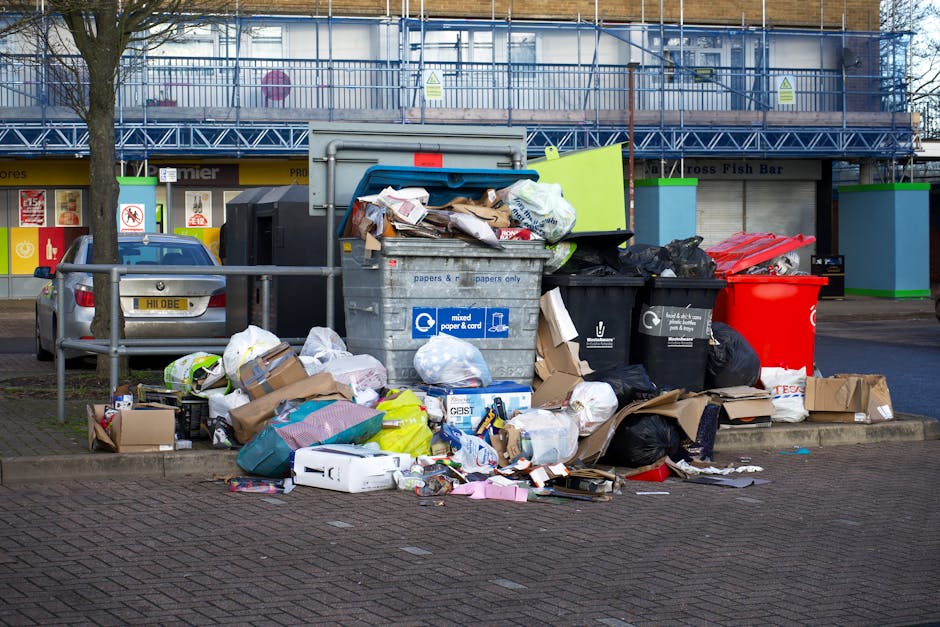
Rubbish removal Greenwich High Road guide for households
If you live near Greenwich High Road, rubbish has a way of building up quietly. A broken wardrobe in the hallway, old bags from a loft clear-out, a bit of garden waste after a weekend of pruning, and suddenly the flat or house feels crowded. This Rubbish removal Greenwich High Road guide for households is here to make the whole process less stressful, less messy, and a lot more manageable.
Household waste removal is not just about getting things out of the way. It is about choosing the right approach for bulky items, sorting what can be reused or recycled, and avoiding the usual headaches: missed collections, heavy lifting, stairwell damage, or ending up with waste that should have been handled differently. Let's face it, nobody wants a pile of junk sitting by the front door for three days.
In this guide, you will find clear steps, practical advice, local considerations, and a simple way to think through your options before you book anything. If you want a broader overview of related services, you may also find the company's waste removal and home clearance pages useful while comparing what kind of help fits your situation.
Table of Contents
- Why rubbish removal on Greenwich High Road matters for households
- How household rubbish removal works
- Key benefits and practical advantages
- Who this is for and when it makes sense
- Step-by-step guidance
- Expert tips for better results
- Common mistakes to avoid
- Tools, resources and recommendations
- Law, compliance, standards, and best practice
- Options and comparison table
- Case study or real-world example
- Practical checklist
- Conclusion
- Frequently asked questions
Why Rubbish removal Greenwich High Road guide for households Matters
Greenwich High Road sits in a busy, lived-in part of London, which means household rubbish removal often has a few extra moving parts. Parking can be tight. Communal entrances can get blocked quickly. Some homes are above shops, some are in converted buildings, and many households simply do not have the space to keep bulky items around while waiting for the "right time" to deal with them.
That is why a proper household rubbish removal plan matters. It saves time, yes, but it also helps protect your home and your neighbours. A careful approach reduces the chance of scratches on stair rails, litter in shared areas, and those awkward moments where a sofa sits in the passageway for longer than anyone hoped.
There is also the question of what happens after the waste leaves your property. Households are usually looking for a straightforward, lawful, and responsible service that separates reusable items, recyclable materials, and general waste properly. For many people, the real value is peace of mind. You want to know the job will be done properly, not just quickly.
Expert summary: the best rubbish removal for households is not simply "fast collection". It is a balanced service: safe lifting, sensible scheduling, clear pricing, and a responsible route for disposal or recycling.
How Rubbish removal Greenwich High Road guide for households Works
At household level, rubbish removal usually follows a simple pattern. You identify what needs clearing, decide whether it is standard rubbish, bulky household waste, or something that belongs in a more specific clearance category, and then arrange collection. The exact process varies, but the basics are usually the same.
Most services begin with a description or quote request. You explain what you have: old furniture, bagged waste, mixed household items, a garage full of bits and pieces, or a loft that has become a storage jungle. In some cases, a photo is enough. In others, a quick conversation helps the provider understand access, volume, and whether anything needs special handling.
On collection day, the team typically loads the waste, sorts it where possible, and removes it from the property. A good provider will be mindful of access points, fragile surfaces, and communal spaces. If your home is a top-floor flat or a narrow terrace near Greenwich High Road, that extra care really matters.
If your needs are more specific, it helps to compare related services. For example, a sofa and dining table may fit under furniture disposal, while a fuller property clear-out may be better matched to house clearance or flat clearance. The job sounds similar from the outside, but the right service often depends on access, volume, and how much sorting is needed.
What the collection team usually looks at
- How much rubbish or bulky waste needs removing
- Whether the items are easy to carry from the property
- Parking and loading access near Greenwich High Road
- Any restrictions around shared entrances or stairs
- Whether items can be separated for reuse or recycling
That last point is easy to overlook. But it makes a difference. If a service can reclaim or recycle more of the load, the whole process tends to feel cleaner and more responsible. And, to be fair, that is what most households want these days.
Key Benefits and Practical Advantages
For households, rubbish removal is not just a convenience. It solves a few very real problems at once. The main benefit is obvious: it clears space. But the hidden benefits are often more valuable.
First, it reduces stress. Anyone who has tried to live around a spare mattress, broken chest of drawers, and three overflowing black bags knows the feeling. Your home starts to feel unfinished. Once the waste is gone, rooms work properly again.
Second, it can improve safety. Loose debris, stacked items, and awkward furniture create trip hazards. In busy households, especially those with children or older residents, that matters more than people sometimes realise.
Third, it can help you move faster when life changes. Moving house, dealing with a tenancy change, preparing a room for renovation, or clearing out after a long period of storage all become easier when the rubbish is handled early rather than left to the last minute.
Fourth, it can be more efficient than trying to do everything yourself. Hiring a van, lifting heavy objects, managing parking, and making multiple trips can eat up an entire day. Sometimes two. A proper service can compress all that into one manageable visit.
There is also a practical benefit in sorting the right waste into the right stream. Household rubbish, old furniture, garden trimmings, and builders waste are not all the same thing. A reliable clearance provider can help avoid cross-contamination and confusion. If your project includes more than just general household rubbish, the company's garden clearance and builders waste clearance pages can give you a better idea of where the boundaries sit.
Who This Is For and When It Makes Sense
This guide is for households, but that still covers a lot of different situations. A single person in a compact flat near Greenwich High Road may need help with one bulky item. A family home may need a full garage or loft clear-out. A landlord may need a property cleared between tenancies. A downsizer may need to deal with years of accumulated belongings. Different story, same basic problem: too much stuff, not enough time, and not much appetite for heavy lifting.
It makes sense to arrange rubbish removal when the waste is:
- Too bulky for normal council bags or bins
- Too heavy to move safely on your own
- Too awkward to fit in a car
- Mixed with furniture, household junk, or renovation leftovers
- Taking up valuable living space
It also makes sense when the job is emotionally draining. Clearing a relative's home, for example, can be physically straightforward but mentally tiring. In those situations, the value of a calm, orderly service is hard to overstate.
If the work is mostly storage-based, you might be looking at a loft clearance or garage clearance rather than general rubbish removal. That distinction helps you avoid paying for the wrong kind of help. Small detail, big difference.
Step-by-Step Guidance
Here is the simplest way to approach household rubbish removal without overcomplicating it. Nothing fancy. Just a clean, practical process.
- Walk through the property
Go room by room and identify what actually needs to go. Be honest here. A chair "that might be useful one day" is not always part of the clearance. - Separate items by type
Group furniture, bagged rubbish, garden waste, and anything else that is clearly different. This helps with quoting and keeps the removal day smoother. - Check access
Measure doorways if needed, note stairs, and think about parking. A top-floor flat with one narrow stairwell is a different job from a ground-floor house with a driveway. - Ask for a clear quote
Good pricing should be easy to understand. If a provider offers transparent pricing information, review it before booking. The company's pricing and quotes page is a sensible place to start if you want to understand how estimates are usually handled. - Clarify what can and cannot be taken
Some items need special care or cannot be treated as ordinary mixed waste. Ask early. It is much easier than discovering the issue on collection day. - Prepare the load
If safe, place items together in an accessible area. Do not block fire exits or shared corridors. Keep the path clear. - Confirm collection timing
Choose a slot that works with your household routine. School runs, work calls, and neighbour access all matter more than people first think. - Check what happens afterwards
Responsible disposal should include some level of sorting and recycling where possible. If sustainability matters to you, look at the provider's recycling and sustainability information too.
A little planning saves a lot of awkwardness. Truth be told, most collection problems come from unclear access or vague descriptions, not from the actual rubbish itself.
Expert Tips for Better Results
A few small habits can make the whole process easier. These are the things that tend to separate a smooth collection from a slightly messy one.
- Take a quick photo inventory. It helps both you and the provider see the scale of the job without guesswork.
- Keep walkways open. It sounds obvious, but one cluttered hallway can slow everything down.
- Label anything you want to keep. A bit of masking tape on a box can save a lot of confusion.
- Ask about handling for fragile spaces. Wooden floors, narrow stairs, and shared entrances need a careful touch.
- Book earlier than you think you need to. If you are trying to clear the house before a move, the last week gets busy very quickly.
- Group heavy items near the exit if it is safe to do so. That reduces carrying time and lowers the risk of bumps or scrapes.
In our experience, the best results come when the household treats the removal like a short project rather than a panic clear-out. A relaxed 20-minute sort through a cupboard on a Tuesday evening often beats a frantic Saturday morning scramble. Funny how that works.
If you are dealing with a larger home or multiple rooms, it can help to compare home clearance with specific item removal. Sometimes a broader service is actually simpler, especially when you want several types of waste handled in one visit.
Common Mistakes to Avoid
Most household rubbish removal mistakes are easy to avoid once you know what to watch for. The trick is not to underestimate the job.
1. Leaving the sorting until collection day.
This creates delays, confusion, and extra handling. A little sorting before the team arrives usually saves time and money.
2. Forgetting about access.
A sofa may look manageable in the lounge, but if it has to turn a tight corner on the stairs, that is another story. Always think through the route out of the property.
3. Mixing unrelated waste types.
Garden cuttings, old paint tins, broken furniture, and renovation debris should not all be treated as one giant pile. Different material types often need different handling.
4. Assuming everything is recyclable.
Many households hope for a neat, zero-waste outcome, which is understandable. But some loads are mixed and some materials simply cannot be recovered cleanly. Better to ask than assume.
5. Choosing the cheapest option without checking the details.
A low headline price can be misleading if access, labour, or disposal are not clearly explained. Cheap can become expensive. Fast.
6. Forgetting about household responsibilities.
If you live in a shared building, you may need to consider neighbours, building rules, or access arrangements. That is not glamorous, but it matters.
One of the easiest ways to avoid hassle is to describe the waste exactly as it is, not as you hope it might be. A battered wardrobe is still a battered wardrobe.
Tools, Resources and Recommendations
You do not need specialist equipment for most household rubbish removal jobs, but a few simple tools make life easier.
- Strong bin bags or rubble sacks for lighter loose waste
- Gloves for sharp edges, splinters, and dusty loft items
- Measuring tape for furniture, stairwells, and doorways
- Marker labels for keep, donate, and remove piles
- Basic cleaning supplies so you can tidy the space after the clearance
For some households, the most useful "resource" is actually clarity. Knowing whether you need a furniture-focused job, a whole-property clearance, or a general waste service makes the whole thing simpler. If the main issue is old seating, tables, or cupboards, look at furniture clearance. If the property is being fully emptied, the house clearance option may be a better fit.
Useful recommendations are pretty straightforward:
- Get a written or clearly stated quote before work starts
- Confirm what is included in labour and disposal
- Check that access and parking are understood in advance
- Keep valuables and paperwork separate from the waste pile
That last one sounds small, but it saves a lot of stress. Receipts, passports, photo albums, and loose keys have a way of hiding in plain sight when a room is full of clutter.
Law, Compliance, Standards, or Best Practice
Household rubbish removal in the UK should be handled carefully and responsibly. You do not need to become a legal expert, but you do want to use a service that follows normal best practice for waste handling, safety, and disposal. That includes understanding the difference between household waste, bulky waste, recyclable material, and items that may need specialist treatment.
It is sensible to ask a provider how they manage waste transfer, sorting, and disposal. Good practice usually includes appropriate handling of items, secure transport, and disposal routes that avoid unnecessary landfill where recycling or reuse is possible. If you are comparing providers, look for reassurance around health and safety policy, insurance and safety, and overall service transparency.
There is also a practical duty on the household side: do not leave waste where it creates hazards, blocks access, or risks fly-tipping. If you are clearing items yourself before collection, keep paths clear and be sensible about weight. A twisted back is not a badge of honour.
For bigger jobs, especially where a property is being emptied or goods are changing hands, it is helpful to understand the provider's terms. The company's terms and conditions and about us pages can give extra context on how the service is presented and managed.
Options, Methods, or Comparison Table
Different household situations call for different solutions. Here is a simple comparison to help you decide what fits best.
| Method | Best for | Pros | Trade-offs |
|---|---|---|---|
| Self-removal | Small loads, light bags, one or two items | Flexible timing, hands-on control | Requires transport, lifting, and disposal planning |
| Booked rubbish removal | Bulky waste, mixed household items, tight schedules | Fast, convenient, less lifting | Costs more than doing it yourself |
| Furniture-specific removal | Sofas, wardrobes, tables, beds | Good for heavy items, often more efficient | Less suitable for mixed waste loads |
| Full house or flat clearance | Moves, downsizing, tenancy changes, large declutters | Best for bigger projects, less coordination | May be more than you need for one or two items |
If you are stuck between options, ask a simple question: am I removing a few things, or am I clearing a space? That one question usually tells you more than a long sales pitch ever could.
Case Study or Real-World Example
Here is a realistic household scenario. A family living just off Greenwich High Road has been slowly filling a spare room with old furniture, flat-pack leftovers, and several bags of mixed clutter. Nothing dangerous, nothing dramatic. Just the kind of build-up that happens when "we'll sort that later" becomes a running joke.
They start by grouping the items into three piles: furniture, bagged rubbish, and items to keep. One broken chest of drawers turns out to be too large for the hallway once measured properly, so they note the dimensions before the collection team arrives. A couple of pictures are taken, and parking is checked in advance because the street gets busy mid-morning.
On the day, the team removes the bulky items first, then the mixed waste. The hallway stays clear, the front door is not left open for long, and the load is finished in one go instead of several small trips. Not glamorous, but very effective.
The family later says the best part was not the space itself, although that helped. It was the feeling that the room had become useful again. A spare room is a spare room again, not a storage graveyard. That's the win.
Practical Checklist
Use this checklist before your household rubbish removal appointment:
- List the items you want removed
- Separate keep, donate, recycle, and remove piles
- Check stairs, doors, lifts, and parking access
- Measure any bulky furniture if needed
- Take clear photos of the load
- Confirm the service type you actually need
- Ask what is included in the quote
- Move valuables, paperwork, and personal keepsakes out of the area
- Make sure routes and shared spaces are clear
- Review recycling or disposal expectations beforehand
If you are looking for a more focused service, it may also help to compare household rubbish removal with furniture disposal or garage clearance, depending on what is actually piling up at home.
Conclusion
Household rubbish removal on Greenwich High Road works best when it is treated as a practical project rather than a last-minute chore. The right approach protects your home, saves time, and makes the result feel properly finished rather than half-done.
Focus on clear descriptions, sensible access planning, responsible handling, and the service type that matches your load. That is usually where the difference lies. Not in fancy language, just in getting the basics right.
If you want a calmer, cleaner home without the backache and the guesswork, a well-planned rubbish removal service can make a genuine difference. And once the clutter has gone, the space feels lighter. You notice the silence a bit more, the light coming through the window, the room breathing again.
Get a free quote today and see how much you can save.
Sometimes the best home improvement is simply getting rid of what no longer belongs there.
Frequently Asked Questions
What is the best way to arrange rubbish removal for a household near Greenwich High Road?
The best way is to sort the items first, check access, and then request a clear quote based on the actual load. Photos help a lot. If you are dealing with furniture or a fuller property clear-out, matching the service to the job usually gives the smoothest result.
How do I know whether I need rubbish removal or a full clearance?
If you have a few bulky items or mixed waste, rubbish removal is often enough. If you are clearing several rooms, a loft, a garage, or an entire flat or house, a broader clearance service is usually more suitable.
Can household rubbish removal handle furniture too?
Yes, in many cases it can. Furniture is often removed as part of a household clearance, but some providers separate this into a dedicated furniture service. It depends on the item type, size, and how much else is being collected.
What should I do before the collection team arrives?
Group the waste together, keep access paths clear, move valuables away, and make sure you have identified anything that should stay. A quick room check before the team arrives is usually worth the effort.
Is rubbish removal suitable for flats above shops or upper-floor homes?
Yes, but access matters. Upper-floor homes and mixed-use buildings need a little extra planning around stairs, lifts, and communal areas. It is worth mentioning these details when you book.
How can I make sure my waste is handled responsibly?
Ask about recycling and disposal practices, and look for a provider that explains how it manages waste safely. You do not need every technical detail, but you should feel comfortable that the load will not simply be dumped somewhere unsuitable.
What items are usually hardest to remove from a household?
Large wardrobes, sofas, mattresses, and heavy appliances are often the trickiest because of their size and the access needed to move them safely. Loft items can also be awkward if stairs are narrow or the space is cramped.
Do I need to sort recycling before booking rubbish removal?
It helps, but you usually do not need to sort everything perfectly. A basic separation of furniture, bagged rubbish, and special items makes the job easier and may improve the efficiency of the collection.
How far in advance should I book household rubbish removal?
As early as you can if you are working to a deadline. For a simple job, a short lead time may be fine. For a move, tenancy change, or large clear-out, earlier is always better. The last week before a deadline can get a bit chaotic.
What if I only have one or two items to remove?
That can still be worth arranging, especially if the items are large or difficult to move. One awkward sofa or bed frame can be more trouble than a whole bag of smaller waste. Sometimes the smallest jobs are the most annoying, frankly.
Can rubbish removal help before a home move or renovation?
Absolutely. Clearing waste before a move or renovation makes the property easier to work in and reduces the chance of delays. It also helps tradespeople and movers get in and out more easily, which everyone tends to appreciate.
Where can I learn more about the company before booking?
You can review the company's about us, pricing and quotes, recycling and sustainability, and contact us pages to get a clearer sense of how the service is presented and what to expect.